
Find Your Perfect Stud Fit — Once and For All
How to Choose the Right Stud Size for Your Piercing
Stud sizing isn’t one-size-fits-all.
The same stud can sit very differently depending on your ear anatomy, piercing placement, and post length.
This guide will help you choose the right size with confidence.
 1. Stud Back Styles Explained
The back style you choose affects comfort, security, and how your jewellery feels throughout the day.
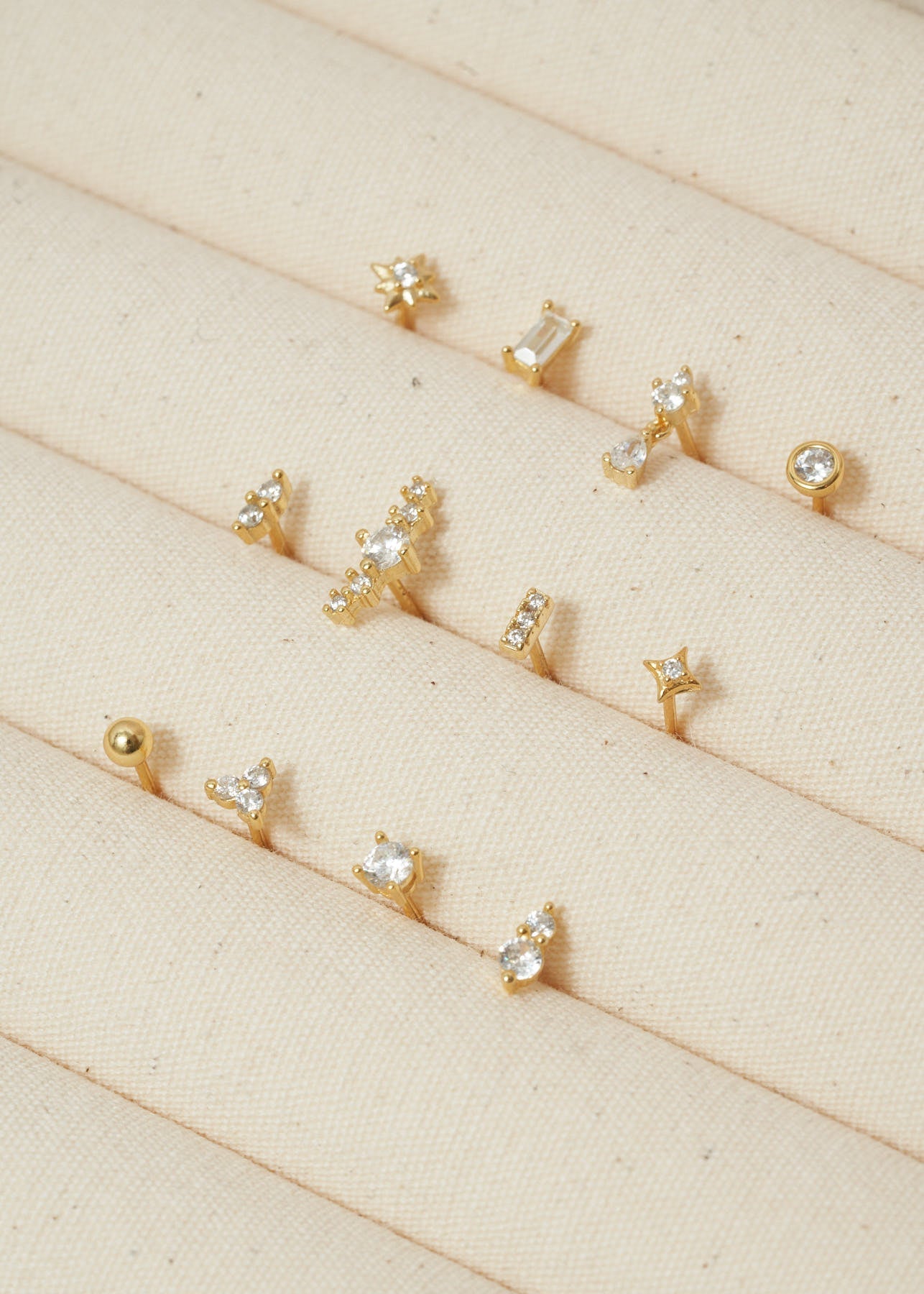
Barbell
A straight post secured with a screw-on ball.
Best for cartilage piercings such as helix, rook, and conch. Barbells are extremely secure and ideal for active lifestyles. They’re commonly used in professional piercings and offer strong hold for thicker cartilage areas.
Flat Back (Labret)
A straight post with a smooth, flat disc at the back.
Suitable for lobe, helix, tragus, conch, and flat piercings. Flat backs sit flush against the ear, reduce pressure, and minimise movement. They are often preferred for everyday wear and sleeping due to their seamless, comfortable fit.
Butterfly Back (Push Back)
The traditional backing that slides onto the post.
Best suited for standard lobe piercings. Easy to wear and familiar in style. However, butterfly backs can press into the ear and are generally less comfortable for cartilage piercings or sleeping.
 2. The Two Measurements That Matter
When choosing a stud, there are two key measurements to consider:
Gauge (G) – Post Thickness
This refers to how thick the post is.
Common gauges:
20G (0.8mm) – Standard thin lobe piercing
18G (1.0mm) – Slightly thicker
16G (1.2mm) – Most common for cartilage and flat backs
If you normally wear butterfly-back earrings, they are typically 20G or 18G. Flat backs are often 16G, which is slightly thicker.
 Post Length (mm) – Bar Length
This is the straight portion that passes through your ear.
Post length determines how the stud sits.
Too short:
• Feels tight
• Causes pressure or redness
• No natural movement
Too long:
• Rotates constantly
• Bar becomes visible
• Feels unstable
The correct fit should feel secure but never tight.
 3. Most Common Stud Lengths (Healed Piercings)
Below are general guidelines:
| Piercing | Typical Length |
|---|---|
| First Lobe | 6mm |
| Upper / Second Lobe | 5–6mm |
| Helix | 6mm |
| Tragus | 6mm |
| Conch | 6–8mm |
| Flat | 6mm (8mm if thicker cartilage) |
If your piercing is new, healing, or prone to swelling, always size up.
4. Important Size Note
The chart provided is for reference only. Ear thickness and placement vary from person to person.
We recommend:
• Checking the size of the jewellery you currently wear
• Consulting your professional piercer
• Contacting us if this is your first time purchasing flat backs
Flat back studs are commonly 16G, which may be thicker than traditional butterfly-back earrings.
5. Final Tip
If you’re unsure, tell us:
• Where your piercing is located
• Whether it is fully healed
• If you prefer a snug or slightly looser fit
We’re always happy to help you choose the right size.